A digital platform for cultural and artistic exploration of human condition.
INTERVIEW WITH BRITISH SOUND SUPERVISOR NINA HARTSTONE
by Sophie Sound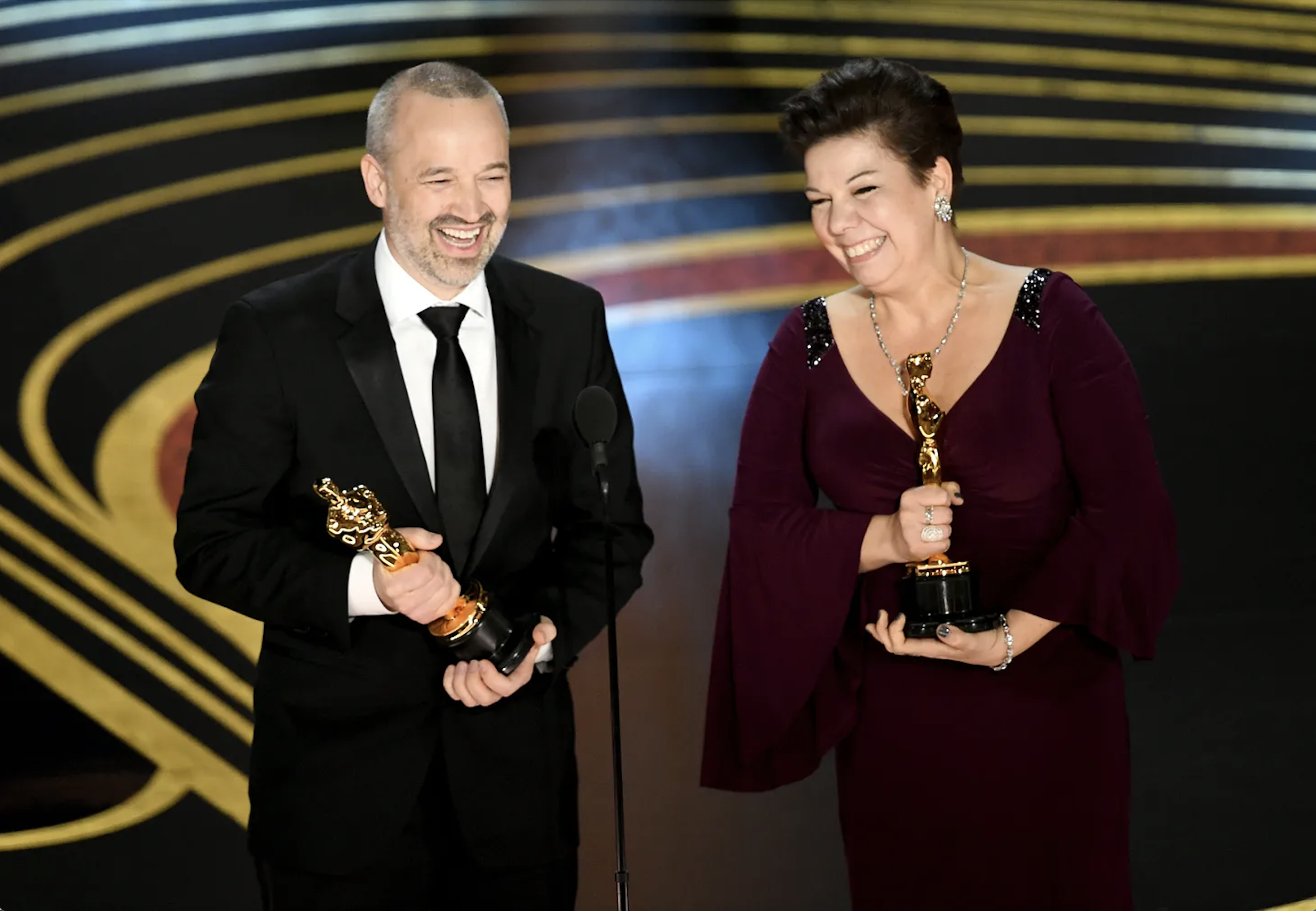
Nina Hartstone appears on my screen. It's Friday afternoon in London, but morning in Mexico City. We are connected via Zoom. Her list of credits is long, and I'm not sure how to start the conversation. She is a Supervising Sound Editor who won an Oscar for the movie ‘Bohemian Rhapsody’ and played a crucial role in the David Bowie documentary ‘Moonage Daydrem’, the movies Saltburn, Gravity and Everest, among many other films that I love. I am nervous, but I have prepared some questions. Nina looks comfortable in her home studio, her knee leaning against the table edge in a room flooded with light. She talks openly and comfortably about the industry and the experiences she has gathered over the years on various projects. We discuss long working hours and how to work hard in this business without "sucking the oxygen out of the room". She says she is simply too old and 'over it'.
I clear my throat, look at myself in the Zoom picture, and then at my document.
I clear my throat, look at myself in the Zoom picture, and then at my document.
S: What are you most proud of?
N: You know, I started off as a trainee, not really knowing anything about sound, and worked my way up to supervising. It's been quite a journey. I originally wanted to work in the art department, but ended up in sound. I found it fascinating to learn how it was put together. I think that I just love telling the story with sound and, you know, I have an appreciation of the fact that sound encompasses much more than just sound design. Obviously, the score is important for emotional drive and excitement, but so are the performances of the actors and the nuances of their work.
“Nina is obviously proud of her work. As someone who opens up answers with a little more scope, I appreciate someone that does too. We are just a few moments in the interview and I already get a glimpse of the many layers, the many years and the many films she has worked on.”
My work has come up very much through the dialogue and ADR, and I think it's one of those things that if we sort of do our work well on sound, it very often just becomes invisible. I think a lot of people, even those who work in film and other departments, don't actually realise what's involved with getting the sound together and creating sound, because if it's done well enough, it just appears to be the sound that was captured on the day on the boom or whatever. There's definitely work that I feel quite proud of, and there's not a single thing where I feel there's something else I would do differently. I don't think we're in a job where you ever feel like you're finished. The only thing that ever stops the work is the deadline, and I look back on work that I know I was proud of at the time, but everything moves on, my techniques move on, the software moves on, so you look back on stuff and you're like, ‘Oh, I think I could do that a bit better now with the learning I've had over previous years.’
It is a bit of a tough one to answer, only because so often, with sound work, we’ve done well if we’ve made our work invisible, and the final result is that the audience feels that what they’re hearing is authentic and real. My work on the Live Aid sequence in Bohemian Rhapsody is something the whole team was very proud of. Creating the joyous experience of that iconic performance, with our work on the music and the crowds, was a wonderful challenge!
N: You know, I started off as a trainee, not really knowing anything about sound, and worked my way up to supervising. It's been quite a journey. I originally wanted to work in the art department, but ended up in sound. I found it fascinating to learn how it was put together. I think that I just love telling the story with sound and, you know, I have an appreciation of the fact that sound encompasses much more than just sound design. Obviously, the score is important for emotional drive and excitement, but so are the performances of the actors and the nuances of their work.
“Nina is obviously proud of her work. As someone who opens up answers with a little more scope, I appreciate someone that does too. We are just a few moments in the interview and I already get a glimpse of the many layers, the many years and the many films she has worked on.”
My work has come up very much through the dialogue and ADR, and I think it's one of those things that if we sort of do our work well on sound, it very often just becomes invisible. I think a lot of people, even those who work in film and other departments, don't actually realise what's involved with getting the sound together and creating sound, because if it's done well enough, it just appears to be the sound that was captured on the day on the boom or whatever. There's definitely work that I feel quite proud of, and there's not a single thing where I feel there's something else I would do differently. I don't think we're in a job where you ever feel like you're finished. The only thing that ever stops the work is the deadline, and I look back on work that I know I was proud of at the time, but everything moves on, my techniques move on, the software moves on, so you look back on stuff and you're like, ‘Oh, I think I could do that a bit better now with the learning I've had over previous years.’
It is a bit of a tough one to answer, only because so often, with sound work, we’ve done well if we’ve made our work invisible, and the final result is that the audience feels that what they’re hearing is authentic and real. My work on the Live Aid sequence in Bohemian Rhapsody is something the whole team was very proud of. Creating the joyous experience of that iconic performance, with our work on the music and the crowds, was a wonderful challenge!
Everest is a film I was very proud of my work, just because we had to create so many of those performances in post-production, and those are challenging. It is a challenging environment to create those performances in ADR, but the actors did amazing work.
The same goes for Mowgli, which I worked on with Andy Serkis. For me, that was a whole new challenge: to go into the motion capture side of things and these hybrid sessions of being on set, where the VFX camera is involved, but we also need to reference the picture that has already been shot. It's like an ADR session, but it's a shoot, and it involves figuring out techniques to allow the level of movement required for those sorts of performances. It was super fun, because Andy's a very mobile guy. When he wants to get into character, and when you’re playing, he gets into character. They're all playing animals for the most part, so that was really fun.
S: I love that about our job! No project is the same. And, because you have to get familiar with the world you are working in, the knowledge you gain and get through the research is so much fun. When it comes to Sound Design, for example, there are a lot of different things you can do. I’ve been listening to a podcast with Jonnie Burn the other day, where he describes how he found the sound of the UFO in Jordan Peele’s ‘NOPE’. He let a microphone down his throat and started to gurgle, or something. And I do a lot of work in Game Audio, where Sound Design is a lot of designing source material and then designing with those, animated things… I want to ask also, on behalf of some colleagues in that field, what Sound Design in film means.
N: I think sound design is very much sort of seen as tones and bangs and whooshes, whereas actually it is semantics in a way. I think sound design is always seen as something you can't hold a mic to. It's like sound effects and editing the sound effects, creating the atmospheres, world building. In film, it is generally about creating the sounds that you would hear if you were standing next to that actor in that moment. But sound design is seen as something that's more subjective, that maybe sits alongside the score a bit more, or it works alongside the score, and or can bring you inside the world of the character's heads, or create something that just doesn't exist, like spaceships and creature voices. I think it's very hard to sort of peel all the layers that go into sound and all the work that goes into sound. Although we do loosely put everything into dialogue, effects and music, the lines are blurred. So on something like Rhapsody, vocals become like sung dialogue, clapping and singing along to the songs in the crowds become part of the music in a way, because they need to be, they're musical, they need to be in tempo, and those sorts of things, the lines cross. I think sound and music, we are the soundscape, and I sort of feel we just all need to work together and all be pulling in the same direction, but the great and the fun stuff happens when we're all just bouncing ideas off each other, and you know, as a viewer, you can't tell if it's score or if it's sound design. There's musical talent within music, and there's musical talent within sound design, and everyone's trying to do the same thing, potentially. The best thing to do is bring these slightly different standpoints together in a way where the weaving between the two of them is just perfect, and that's the goal.
S: I totally hear what you are saying. I recently watched The Brutalist and oftentimes could not tell if sounds were Sound Design or the Soundtrack. I liked that so much.
N: We had quite a lot of that on Gravity as well, because the score was providing quite a lot of the things that potentially sound design would normally provide. But because you're in space and no one can hear you in space, the cinematic kind of language became that. Every film has its own cinematic language.
S: Yeah, I mean, just for a fact, you are in space. How does space sound? And it seems to me not to be a film where you can get as real as possible. You have to think outside the box.
N: You're absolutely right. So often you think, right, I'm going to get this actual, genuine thing that they had in the shoot, I'm going to record it, and you're recording, but then that's a little disappointing. It's never quite as good as you think it's going to sound, so you end up having to embellish it anyway, you know? But it's exactly that, it's experimenting. It's never quite as good as you think it's going to sound, so you end up having to embellish it anyway. But it's exactly that, it's experimenting.
“ Oh, thanks for your comment. You will always feel understood by Nina. She talks about her own experiences, where things go wrong, where you struggle and where you can be creative. A place that makes you feel desperate. I often find myself in these situations, but I'm not sure if I'm doing the right thing because I change what I'm doing to get things done. Hearing it from her is a real boost.
N: This is from Everest, the masks that they were wearing, and so part of the reason we had to ADR everything so much is because this is what it sounded like…literally. (showing me the mask and demonstrating the use of in ADR).I had to shoot ADR before the film could be cut, because you can't hear their performances because they were in their masks. So, we had a huge amount of ADR in that film for this reason, but also for the fact that any of the storm stuff had wind machines all over it. We were trying to figure out basically how to mic the masks, because in ADR they still need to sound like they're wearing a mask. We tried putting mics inside, we tried putting mics outside, we tried different oxygen masks that we rented in, and this is what we ended up with: it is a colander with fabric in it. When they were recording their ADR, they do lots of stuf: Put it down to try and talk to someone else, but then they talk back in the mask.
S: I love that about our job! No project is the same. And, because you have to get familiar with the world you are working in, the knowledge you gain and get through the research is so much fun. When it comes to Sound Design, for example, there are a lot of different things you can do. I’ve been listening to a podcast with Jonnie Burn the other day, where he describes how he found the sound of the UFO in Jordan Peele’s ‘NOPE’. He let a microphone down his throat and started to gurgle, or something. And I do a lot of work in Game Audio, where Sound Design is a lot of designing source material and then designing with those, animated things… I want to ask also, on behalf of some colleagues in that field, what Sound Design in film means.
N: I think sound design is very much sort of seen as tones and bangs and whooshes, whereas actually it is semantics in a way. I think sound design is always seen as something you can't hold a mic to. It's like sound effects and editing the sound effects, creating the atmospheres, world building. In film, it is generally about creating the sounds that you would hear if you were standing next to that actor in that moment. But sound design is seen as something that's more subjective, that maybe sits alongside the score a bit more, or it works alongside the score, and or can bring you inside the world of the character's heads, or create something that just doesn't exist, like spaceships and creature voices. I think it's very hard to sort of peel all the layers that go into sound and all the work that goes into sound. Although we do loosely put everything into dialogue, effects and music, the lines are blurred. So on something like Rhapsody, vocals become like sung dialogue, clapping and singing along to the songs in the crowds become part of the music in a way, because they need to be, they're musical, they need to be in tempo, and those sorts of things, the lines cross. I think sound and music, we are the soundscape, and I sort of feel we just all need to work together and all be pulling in the same direction, but the great and the fun stuff happens when we're all just bouncing ideas off each other, and you know, as a viewer, you can't tell if it's score or if it's sound design. There's musical talent within music, and there's musical talent within sound design, and everyone's trying to do the same thing, potentially. The best thing to do is bring these slightly different standpoints together in a way where the weaving between the two of them is just perfect, and that's the goal.
S: I totally hear what you are saying. I recently watched The Brutalist and oftentimes could not tell if sounds were Sound Design or the Soundtrack. I liked that so much.
N: We had quite a lot of that on Gravity as well, because the score was providing quite a lot of the things that potentially sound design would normally provide. But because you're in space and no one can hear you in space, the cinematic kind of language became that. Every film has its own cinematic language.
S: Yeah, I mean, just for a fact, you are in space. How does space sound? And it seems to me not to be a film where you can get as real as possible. You have to think outside the box.
N: You're absolutely right. So often you think, right, I'm going to get this actual, genuine thing that they had in the shoot, I'm going to record it, and you're recording, but then that's a little disappointing. It's never quite as good as you think it's going to sound, so you end up having to embellish it anyway, you know? But it's exactly that, it's experimenting. It's never quite as good as you think it's going to sound, so you end up having to embellish it anyway. But it's exactly that, it's experimenting.
“ Oh, thanks for your comment. You will always feel understood by Nina. She talks about her own experiences, where things go wrong, where you struggle and where you can be creative. A place that makes you feel desperate. I often find myself in these situations, but I'm not sure if I'm doing the right thing because I change what I'm doing to get things done. Hearing it from her is a real boost.
N: This is from Everest, the masks that they were wearing, and so part of the reason we had to ADR everything so much is because this is what it sounded like…literally. (showing me the mask and demonstrating the use of in ADR).I had to shoot ADR before the film could be cut, because you can't hear their performances because they were in their masks. So, we had a huge amount of ADR in that film for this reason, but also for the fact that any of the storm stuff had wind machines all over it. We were trying to figure out basically how to mic the masks, because in ADR they still need to sound like they're wearing a mask. We tried putting mics inside, we tried putting mics outside, we tried different oxygen masks that we rented in, and this is what we ended up with: it is a colander with fabric in it. When they were recording their ADR, they do lots of stuf: Put it down to try and talk to someone else, but then they talk back in the mask.
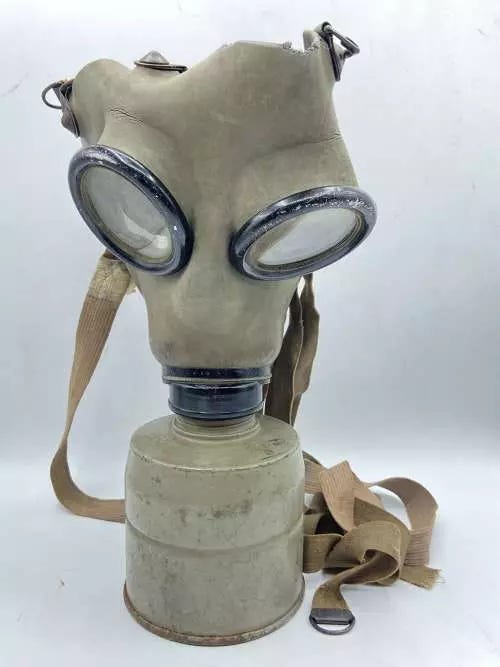
S: Sounds to me you are going for a certain aesthetic.
N: I don't want anything to sound too pure. I know you can filter stuff, but it never sounds real doing that. They talk into the colander, so we just had the mic the other side of the colander, and then they'd pull this away (to the right) when the mask comes off, and then they talk back into the colander, and it just kind of shuts the voice down a bit, just enough for us to be able to then push it further where needed to make it believable as behind the mask. I have a real thing about stuff that plays out of people's phones or out of TVs in films, it always sounds fake to me, so we worldize anything like that. So anything that plays out of a phone, we just play it out of the phone and then record it.
By this time, I realise that Nina Hartstone is unfailingly proud of her work and very polite. Swinging her chair to the side and grabbing a prop from Everest, she clearly loves her work and feels very confident in her own artistic universe. I start to feel like a pupil, relaxing, finally finding a comfortable position in my chair from which to lean back and listen attentively. My list of questions naturally grows.
S: That brings me straight to the question of “What a day in the life of the Sound Supervisor, Nina Hartstone, looks like”.
N: Generally, I’ll join the film crew. I like to liaise earlier on. In pre-production, I like talking to the production sound mixer and the director. We think about sound, and make sure we take advantage of any opportunities that might arise on set. Then, during the director's cut, I'll normally come on board full-time. When they're (director, sound mixer) thinking about screening an edit of the film, we'll usually come in a few weeks before that to start helping them out with some sound. There might be some dialogue that needs cleaning up, maybe we need a bit of Foley to make things sound less like it's on set. There might also be some key sound design work that will help to lift certain scenes, or help the edit and make the point of the story. In those stages, it's all about the spotting session with the director and editor. We run through everything, and get their brain dump of everything that's happened and all the things that are worrying them. All the ideas they got about sound. Then, we go away and start sketching out what will help them. During these phases, it's all about being sat in front of Pro Tools and editing. I've got a little home studio where I'm sitting now, at the end of my garden. It's quite intense, staring at the screen, just trying to get as much under your belt as possible editorially, while making sure the team has everything they need.
Once we can get to an edit where we think, "Okay, now we can start thinking about the recording phase", we'll maybe go to Oxford to capture some live recordings of things we want for the sound design, such as live crowds.
S: Yeah, that is something I wonder. How do you guide your team through the creative process? Of course, you have your team, and as you said, every project needs experimentation and different approaches, and it takes a while to figure things out. And let's say if the team doesn't get it right the first time, you have to explain your idea in a different way. How do you do that? How do you get them to where you want them to be?
N: I'm a big fan of collaboration and teamwork. We all work long hours and very hard in this business, and I think everyone needs to feel their contribution matters; they're not just colouring by numbers — we're all collaborating to make something as good as it can be. The team I work with is very open; there are no egos, and nobody gets attached to their work. We're all working in service of the film. There is no right or wrong with artistic and creative stuff, so we talk a lot. We used to all be in one room down a corridor, but since the pandemic, everyone has been working in remote locations until you get to a theatre. I will identify points during the process where it'd be useful for us all to be together. I would hire rooms in a central London location where we can all come in together to review stuff, so everybody can contribute. I have worked with the same people for a while, we have really good collaboration and an unspoken communication, and we can really help the director find ways to support them.
I don't know how many times Nina has spoken to people about this already, but she's doing a great job. You don't even have to ask. She is certainly very engaged, collaborative, and supportive. We carry on, and I want to ask anything that comes to my mind.
S: Have you learnt to play an instrument?
N: I mean, I do find my background is not particularly musical. I didn't learn music particularly, but working with musicians is great. You'll find that many actors who have a musical ear are really good at ADR, because they just hear the rhythm. I do feel that pulse that is there with the music, and I love working with musicians like Daniel Pemberton, who did the score on Enola Holmes. He's great because we bounce ideas back and forth. In both films, we had a couple of characters who had a cane, you know, the stick that would hit the ground, creating interesting soundscapes. The language of the sound in that film is quite quirky, but not comic book-like. We always wanted to make sure that we were working with music that was really full, fun, and descriptive, so we just needed to make sure that we were helping each other. If we've got a really detailed piece of music, then we need to keep it simple, and every shot or every moment in the film should lean one way or another — either it's leaning to the music, or it's leaning to just dialogue, the sound design, or whatever. There's a right thing to hear at each moment.
S: Which personalities/creative ideas in young talent do you value a lot? Or, what do you look for in young talent?
N: That's a really good question. I think one of the things I value is being keen. Just being interested in what we're doing, interested in how the sound is put together, so that you show your passion for the subject. The other thing is just being positive and bright, because we do work long hours. It can be really hard, and you can get feel downtrodden, and you can feel like things are impossible, and you can feel like you never have enough time or enough resources, or you've worked long hours and you don't have a terrible work life family balance, and all of these things can be the case in this business, but actually the value of positivity in what we do is is huge. To actually just have someone who just brings an energy of positivity to the room is great. Obviously, there's a learning curve at the beginning. You're dealing with a lot of creative personalities, so it can feel a bit unstable at times. You need to learn how to read the room. Someone who's just coming in doesn't have those skills yet, because they don't have the experience yet. Understanding when to speak and when not to has changed a lot since I was young — when I first started out, you'd get thrown out if you spoke at the wrong time. I think it's a much more welcoming environment now, for the most part.
S: I often don't know if I should talk about this topic, or how to address it, but I am curious about the whole thing of women in the industry. I don’t want to sound like a rebellious person or something, but I had experiences with gender related imbalances and “unfairness”. I've come to believe that what's missing is crucial: women need to be given a chance. Or, that it comes down to "chances". This applies to any marginalised group, not just women.
N: I mean, I think it absolutely is, and, to be honest, in our guild here, we try to improve representation in our industry — in our sound industry — because it is overwhelmingly white and male. Sadly, even when people look at gender, for example, when people look at film initiatives like Reframe and the Women in Film Initiative, they are not counting in sound, they don't even look at sound. It's difficult because I think we don't have enough women, for sure, doing this, and particularly in leadership roles. It feels like it's starting to change, maybe at ground level, and maybe coming out to mid-level, but then there's a problem for women with children in the business. They often get elbowed out at the point where they would be on the rise, for example, when they have their first child. So, it's a game of snakes and ladders for women: men just keep trotting up the ladders, whereas we go up and slide down, and then go up again. At the HOD (Head of Department) level, production sound mixers, supervisors, sound editors, and re-recording mixers are so few and far between. There are so few people.
S: On the contrary, these all-women teams are debatable.
N: I think all-women have their own problems. You just want someone that's representative. We want everyone to be treated on an even playing field from the get-go. And then, whatever happens, happens, because it is one of those industries.
I sense that it is time to move on to other questions when I see the timer for our Zoom call has run out. Perfect timing! Although I am enjoying the conversation and haven't had the chance to get through all my questions, I adventurously ask her if she would like to do another round. She agrees without hesitation. We jump on the next call.
S: Was there a moment when you felt "ready"? I am working and working and working, and I just can not tell if I am ready to be working in this, or doing freelance work for clients.
N: I mean, I think I'm a big believer in fake it till you make it. I think everything that I've learnt in sound, anyway, I've learnt on the job, like, I had no idea. My degree that I did at university was in art history and film studies.
And it was just writing essays, it was like studying cinema, and that kind of thing. I could write you a killer essay on Dead Ringers, but it doesn't really prepare me to earn any money in the real world. So, all of my learning in sound has been sitting over people and watching what they're doing. I have terrible imposter syndrome anyway, I don't know that I ever feel ready or that I ever feel like I know what I'm doing.
You just have to sort of have a bit of faith, really, and go with it. And, just like I said, I look at a project that I did two years ago and I go, I could do that better now. There's all sorts of things I wouldn't do anymore. I wouldn't cut it that way. Or I think that that scene, I just tried a bit more, something different now, whatever. You know, there's always stuff that I look back on and would do differently.
You're always trying to refine. I don't think there's ever like an end point of right. I'm ready to do this now. So, in that sense, I'm very aware of just trying to not worry too much about whether this is something I can do or not. Let's just take it on, and let's go for it. If I need help with an aspect of it, I'll reach out to someone who's really good at that, and then I'll learn from it.
N: I don't want anything to sound too pure. I know you can filter stuff, but it never sounds real doing that. They talk into the colander, so we just had the mic the other side of the colander, and then they'd pull this away (to the right) when the mask comes off, and then they talk back into the colander, and it just kind of shuts the voice down a bit, just enough for us to be able to then push it further where needed to make it believable as behind the mask. I have a real thing about stuff that plays out of people's phones or out of TVs in films, it always sounds fake to me, so we worldize anything like that. So anything that plays out of a phone, we just play it out of the phone and then record it.
By this time, I realise that Nina Hartstone is unfailingly proud of her work and very polite. Swinging her chair to the side and grabbing a prop from Everest, she clearly loves her work and feels very confident in her own artistic universe. I start to feel like a pupil, relaxing, finally finding a comfortable position in my chair from which to lean back and listen attentively. My list of questions naturally grows.
S: That brings me straight to the question of “What a day in the life of the Sound Supervisor, Nina Hartstone, looks like”.
N: Generally, I’ll join the film crew. I like to liaise earlier on. In pre-production, I like talking to the production sound mixer and the director. We think about sound, and make sure we take advantage of any opportunities that might arise on set. Then, during the director's cut, I'll normally come on board full-time. When they're (director, sound mixer) thinking about screening an edit of the film, we'll usually come in a few weeks before that to start helping them out with some sound. There might be some dialogue that needs cleaning up, maybe we need a bit of Foley to make things sound less like it's on set. There might also be some key sound design work that will help to lift certain scenes, or help the edit and make the point of the story. In those stages, it's all about the spotting session with the director and editor. We run through everything, and get their brain dump of everything that's happened and all the things that are worrying them. All the ideas they got about sound. Then, we go away and start sketching out what will help them. During these phases, it's all about being sat in front of Pro Tools and editing. I've got a little home studio where I'm sitting now, at the end of my garden. It's quite intense, staring at the screen, just trying to get as much under your belt as possible editorially, while making sure the team has everything they need.
Once we can get to an edit where we think, "Okay, now we can start thinking about the recording phase", we'll maybe go to Oxford to capture some live recordings of things we want for the sound design, such as live crowds.
S: Yeah, that is something I wonder. How do you guide your team through the creative process? Of course, you have your team, and as you said, every project needs experimentation and different approaches, and it takes a while to figure things out. And let's say if the team doesn't get it right the first time, you have to explain your idea in a different way. How do you do that? How do you get them to where you want them to be?
N: I'm a big fan of collaboration and teamwork. We all work long hours and very hard in this business, and I think everyone needs to feel their contribution matters; they're not just colouring by numbers — we're all collaborating to make something as good as it can be. The team I work with is very open; there are no egos, and nobody gets attached to their work. We're all working in service of the film. There is no right or wrong with artistic and creative stuff, so we talk a lot. We used to all be in one room down a corridor, but since the pandemic, everyone has been working in remote locations until you get to a theatre. I will identify points during the process where it'd be useful for us all to be together. I would hire rooms in a central London location where we can all come in together to review stuff, so everybody can contribute. I have worked with the same people for a while, we have really good collaboration and an unspoken communication, and we can really help the director find ways to support them.
I don't know how many times Nina has spoken to people about this already, but she's doing a great job. You don't even have to ask. She is certainly very engaged, collaborative, and supportive. We carry on, and I want to ask anything that comes to my mind.
S: Have you learnt to play an instrument?
N: I mean, I do find my background is not particularly musical. I didn't learn music particularly, but working with musicians is great. You'll find that many actors who have a musical ear are really good at ADR, because they just hear the rhythm. I do feel that pulse that is there with the music, and I love working with musicians like Daniel Pemberton, who did the score on Enola Holmes. He's great because we bounce ideas back and forth. In both films, we had a couple of characters who had a cane, you know, the stick that would hit the ground, creating interesting soundscapes. The language of the sound in that film is quite quirky, but not comic book-like. We always wanted to make sure that we were working with music that was really full, fun, and descriptive, so we just needed to make sure that we were helping each other. If we've got a really detailed piece of music, then we need to keep it simple, and every shot or every moment in the film should lean one way or another — either it's leaning to the music, or it's leaning to just dialogue, the sound design, or whatever. There's a right thing to hear at each moment.
“I get a bit dreamy. The fact that we talk so openly and so fluently with each other about realities and the actual daily lives, I got into a question I am shy about, for the reason of being so keen to be part of that work, but whatever…I’ll just do it.”
S: Which personalities/creative ideas in young talent do you value a lot? Or, what do you look for in young talent?
N: That's a really good question. I think one of the things I value is being keen. Just being interested in what we're doing, interested in how the sound is put together, so that you show your passion for the subject. The other thing is just being positive and bright, because we do work long hours. It can be really hard, and you can get feel downtrodden, and you can feel like things are impossible, and you can feel like you never have enough time or enough resources, or you've worked long hours and you don't have a terrible work life family balance, and all of these things can be the case in this business, but actually the value of positivity in what we do is is huge. To actually just have someone who just brings an energy of positivity to the room is great. Obviously, there's a learning curve at the beginning. You're dealing with a lot of creative personalities, so it can feel a bit unstable at times. You need to learn how to read the room. Someone who's just coming in doesn't have those skills yet, because they don't have the experience yet. Understanding when to speak and when not to has changed a lot since I was young — when I first started out, you'd get thrown out if you spoke at the wrong time. I think it's a much more welcoming environment now, for the most part.
S: I often don't know if I should talk about this topic, or how to address it, but I am curious about the whole thing of women in the industry. I don’t want to sound like a rebellious person or something, but I had experiences with gender related imbalances and “unfairness”. I've come to believe that what's missing is crucial: women need to be given a chance. Or, that it comes down to "chances". This applies to any marginalised group, not just women.
N: I mean, I think it absolutely is, and, to be honest, in our guild here, we try to improve representation in our industry — in our sound industry — because it is overwhelmingly white and male. Sadly, even when people look at gender, for example, when people look at film initiatives like Reframe and the Women in Film Initiative, they are not counting in sound, they don't even look at sound. It's difficult because I think we don't have enough women, for sure, doing this, and particularly in leadership roles. It feels like it's starting to change, maybe at ground level, and maybe coming out to mid-level, but then there's a problem for women with children in the business. They often get elbowed out at the point where they would be on the rise, for example, when they have their first child. So, it's a game of snakes and ladders for women: men just keep trotting up the ladders, whereas we go up and slide down, and then go up again. At the HOD (Head of Department) level, production sound mixers, supervisors, sound editors, and re-recording mixers are so few and far between. There are so few people.
S: On the contrary, these all-women teams are debatable.
N: I think all-women have their own problems. You just want someone that's representative. We want everyone to be treated on an even playing field from the get-go. And then, whatever happens, happens, because it is one of those industries.
I sense that it is time to move on to other questions when I see the timer for our Zoom call has run out. Perfect timing! Although I am enjoying the conversation and haven't had the chance to get through all my questions, I adventurously ask her if she would like to do another round. She agrees without hesitation. We jump on the next call.
S: Was there a moment when you felt "ready"? I am working and working and working, and I just can not tell if I am ready to be working in this, or doing freelance work for clients.
N: I mean, I think I'm a big believer in fake it till you make it. I think everything that I've learnt in sound, anyway, I've learnt on the job, like, I had no idea. My degree that I did at university was in art history and film studies.
And it was just writing essays, it was like studying cinema, and that kind of thing. I could write you a killer essay on Dead Ringers, but it doesn't really prepare me to earn any money in the real world. So, all of my learning in sound has been sitting over people and watching what they're doing. I have terrible imposter syndrome anyway, I don't know that I ever feel ready or that I ever feel like I know what I'm doing.
You just have to sort of have a bit of faith, really, and go with it. And, just like I said, I look at a project that I did two years ago and I go, I could do that better now. There's all sorts of things I wouldn't do anymore. I wouldn't cut it that way. Or I think that that scene, I just tried a bit more, something different now, whatever. You know, there's always stuff that I look back on and would do differently.
You're always trying to refine. I don't think there's ever like an end point of right. I'm ready to do this now. So, in that sense, I'm very aware of just trying to not worry too much about whether this is something I can do or not. Let's just take it on, and let's go for it. If I need help with an aspect of it, I'll reach out to someone who's really good at that, and then I'll learn from it.
S: You know, it's as if we're all connected. Every link in the chain is important, from the top all the way right down to the one at the bottom. So, we all need to be there, and we all rely on each other to some extent to get everything done.
N: It's like, I probably should still feel like that many times, but I think I'm just too old. I'm over it. But, you know, it is really tough.
And I think that you should just get as much practice, and spend the time feeling comfortable and confident in what you're doing. But don't let that also hold you back, because guaranteed, the guys around you don't know how to do certain things, but they'll step into that role in a heartbeat and figure it out while they're there. It is a big topic and everyone's got it; it's like a different learning style.
I think one of the things that shows sort of good leadership is to know the strengths of the people on your team and allow them to really excel in the parts that they're good at. We don't have to be good at everything. We don't have to be the person who knows how to do every single bit of it. It's impossible, and it's good. It's creative, and good for us all, and for everyone, to bring their strength. It takes a village to make a film.
S: What kind of stories do you get drawn to?
N: I mean, I think I have to say that I love action films when I watch them. I just think they're great! I'm here for anything Marvel, or all that kind of stuff.
Obviously, I worked on it, but as a film, I love Saltburn. I love the script for the minute. It had all the elements of intrigue that I really like. Growing up, I always liked horror films like The Thing, The Stepford Wives. I don't know what genre you'd call those, but I like films where you can't tell who's real and who isn't, or who's trustworthy and who isn't. But it's funny, because I think it depends on your mood. I'm quite happy to watch a musical as well. I really enjoyed Wicked.
I could keep asking questions, but this one is actually a question from my Pages document. But at this point, I sense that we are in such a flow that I wouldn't mind having some Twigglers and a glass of wine on Friday afternoon.
S: I follow the Oscars, especially the categories for soundtrack, music, and sound categories. I feel there's been a shift in soundtracks and traditional sound work towards more experimental music and ideas, like The Brutalist or Poor Things.
N: I'm noticing it in all sorts of areas, in Netflix series and movies. It’s like I can tell you what colour grade is going to look like. There's something very generic that is happening across certain sorts of lighting, filmmaking, sound, music, all of it, really. It feels like people are seeing a formula and following it, I think. It's interesting to see that there is a kickback against formulaic work. People are liking The Brutalist because they are looking for something that is a bit different. We are all so saturated with content. Whether screens, phone screens, TV screens. There is just so much of it, and we are all looking at it for a ridiculous number of hours a day, that I think we are looking even harder for something that stands out, I feel.
I think some of the more classical scores with absolutely beautiful music in there, but it's starting to feel a little generic. I think most films, I'd be inclined to take a bit more of the music out so that it's more impactful. In a lot of films, the music feels it's wall to wall and dilutes the impact of it.
You need to have some space without score, and certain scenes if you've got really good actors, the audience will lean into it if they're not being spoon fed how to feel before the actor delivers the line. When you do get your payoff, and the score can come, it just means so much more.
You know, you listen to any of those, like Raiders of the Lost Ark, even Harry Potter as well, the early films, with incredible scores doing exactly what they need to do, bringing you through the movie. But, I think, with all of these things, music is a bit like the performance of the actors, it has to have an appropriate level. You can feel when music is being held back that wants to be bigger, or is being pushed that needs to be quieter once it completes with the dialogue.
At some point, you tune out.
S: Do you think you can recognise a certain sound designer in a movie? Are there styles, or something?
N: I feel a difference between Hollywood movies and European movies. In Hollywood, they have a particular style, the Foley is quite loud and proud and weighty, the dialogue, whether it's a whisper or a shout, is all at the same level, and it also has that big, sort of fat, wide diaphragm sound to it. Whereas, I think, in European films, there might be a bit more shape in certain areas. I don't know what's right or wrong, to be honest. I can see it sort of regionally, if you like, but less a particular person.
I could tell you if Paul Massey mixed the music, because it's generally really good. I just know his style now, and if I can hear certain drums having particular frequencies, I know it is Paul Massey.
S: What do you think about bringing sound in at a much earlier stage? Let’s say, already during the writing process. Until a film gets made, it goes through so many stages, there would be loads of opportunities.
N: One hundred percent. I would, and I think it's also slightly unusual for an editor to get involved at the script stage, and that would be useful for them, too. The editor is the person who's seeing how this film is going to be put together, and sound is going to have an influence on that, for its character. Also, sound is so important for transitions. The sound is generally bringing you through the scenes, whether it's like a hard cut out from one to another, or a dissolve across, or something ringing out, or whatever it may be. At the end of a scene, before a new one starts, what the sound does there is delivering a lot of emotion to the viewer, rather allowing them to sit with a thought, or maybe it's crashing them into something new, there's all sorts of stuff there that I think would be great to do at an early stage, and maybe sit down and talk about adding-, because if the sound gets added into the script, it gets factored in the shoot. Lovely to see a script that has sound kind of written into it.
This interview is the fifth part of a series of episodes written and created by Sophie Sound, the brainchild of sound designer and sound artist Sophie Kuebler.
MORE STORIES