A digital platform for cultural and artistic exploration of human condition.
At the Movies: Sorry, Baby
by Sophie Sound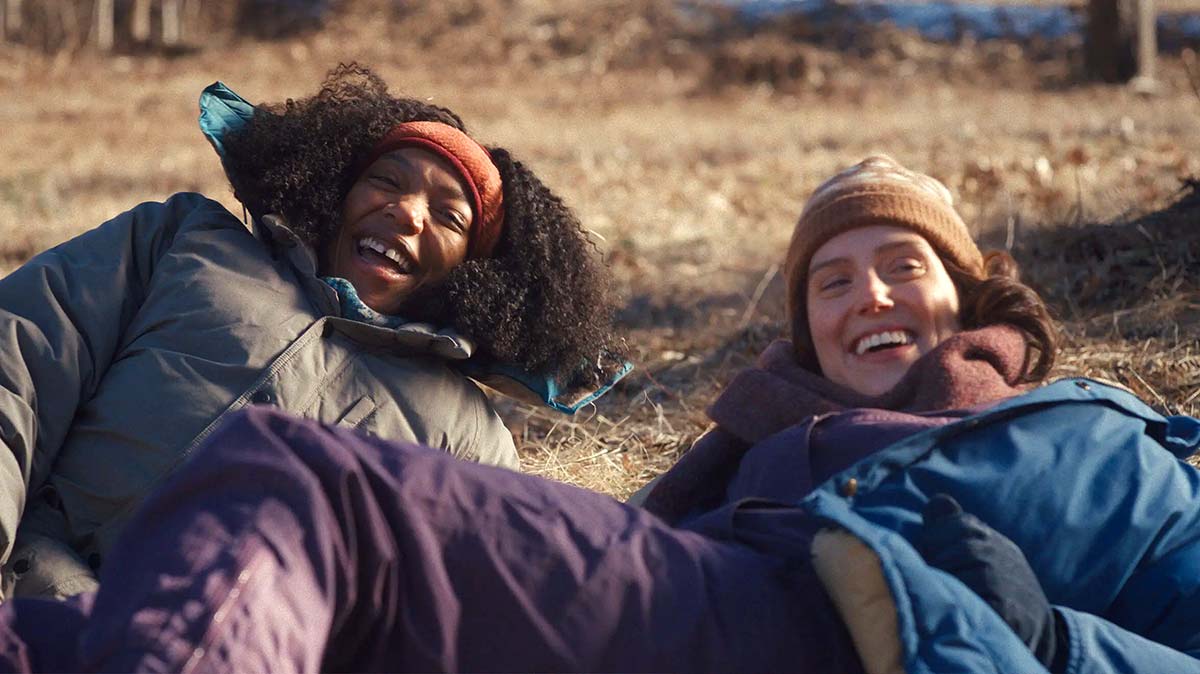
Eva, you're a queen! Sorry, Baby was pretty good. No, it was really good. Yeah, it's a fucking great film.
I had a dry spell with movies; I spent a month in the countryside in Germany at my aunt's house. When I came back to London on a Sunday, the first thing I did was look out for a film. I stumbled upon Sorry, Baby and the Q&A with Eva Vitor. I had been hearing about the film since the beginning of the year because it had won at the Sundance Film Festival. I took my boyfriend to the event, and he was very grateful that I insisted he come with me. Sorry, Baby is one of a kind.
After the film, we stood in the kitchen making a salad and talking about Sorry, Baby.
S: Do you think she wrote everything by herself? The dialogue is fantastic. It's flawless. It's so funny!
P: Yeah. It's clever.
S: The pauses in between...
P: You called it. The timing and delivery are perfect.
S: Yeah,
P: And the contemporary point of view.
The film was really impressive. It’s such a simple story, yet told with such clarity and intention. The relationship at the beginning is so well established, which makes the shift that follows all the more powerful.
During the Q&A, the question that immediately came to mind for me was: “How do you balance a heavy subject with a comedic layer?” To me, that balance is exactly what makes Sorry, Baby such a remarkable film. It manages to tell a story about something deeply painful, but in a way that avoids the usual distance and generalization that can come when we name such traumatic experiences. Instead, it stays grounded in the life and perspective of one individual, showing an entirely different path toward healing.
What struck me most was the generosity in Agnes’s journey and in Eva Victor’s vision of healing. At first glance, generosity might be mistaken for weakness, but here it feels like the opposite. That generosity gave Agnes the space and attention I, as a viewer, longed for. I wanted to know her, to understand her and never once did the film shift its focus toward the perspective of the assaulter. Eva Victor gave me, as an audience member, exactly that.
P: Do you remember the scene where we first meet the two friends? They’re so close, and then everything shifts, Naomi leaves…
S: I think it’s Lydie in the film.
P: Right, she drives away.
S: And Agnes is just standing outside her house for such a long time.
P: Exactly. And then you realize ‘oh my God, this isn’t just about friendship’. This is the story of a lonely woman. Suddenly the whole perspective changes. You see she has a genuine problem, a deep loneliness and you wonder why. That single shot made me go, Whoa, holy fuck. It completely reframed her character.
Eva Victor’s style, through the dialogues, her point of view, and even how she responded during the Q&A made me feel like I was hearing a new voice. A thinker with the freshness of someone like Lena Dunham or Phoebe Bridgers. There’s this sense of female power and perspective that felt really energizing.
Telling a story about mental anguish is never easy. How do you stay with the character instead of reducing it to “the thing”—the generalized version of trauma? Everyone processes and heals differently. What stood out to me was her comment about time. She broke the linear structure, cutting between past and present, yet it never felt confusing. The way she used titles “the year of…” carried us across a five-year span seamlessly.
I remember her saying something like: “These years are not lost. When you experience something traumatic, healing takes stages. First you recollect yourself, then you go back into the world. It often feels like those years are lost, but they’re not.” That really stayed with me.
S: I was already thinking: why would she even go to his house? That’s such a red flag. And then she doesn’t come out… you’re left with this uneasy sense—we kind of know what just happened, but there’s still a sliver of ambiguity.
P: Honestly, I thought they were just going to hook up.
S: And then when she leaves, she sits down for a beat, and you’re like, huh, that’s strange. Then she just walks off, visibly in shock.
P: And the way he comes to the door, so timid, almost awkwardly funny. I’ve never seen a scene quite like that.
S: Yeah, it was so unusual. And then later, when she explains it in the bathtub… you just believe her instantly. There’s such honesty in that conversation. Lydia, well, Naomi, the actress, says simply, “It sounds like you were saying no quite a few times. Maybe too many.” That one line lands so heavily. I was really impressed, and honestly relieved, that Eva was able to tell this story to a wide audience. It feels like a new voice, a new director—someone original, not imitating anyone else.
P: It’s fucking brilliant.
It’s about how you wrap something up in a story and then tell it with your own truth.
S: Exactly.
P: Do you want some salad?
S: I’m really glad we went.
P: Yeah, me too. Want me to serve you some? How much do you like?
I had a dry spell with movies; I spent a month in the countryside in Germany at my aunt's house. When I came back to London on a Sunday, the first thing I did was look out for a film. I stumbled upon Sorry, Baby and the Q&A with Eva Vitor. I had been hearing about the film since the beginning of the year because it had won at the Sundance Film Festival. I took my boyfriend to the event, and he was very grateful that I insisted he come with me. Sorry, Baby is one of a kind.
After the film, we stood in the kitchen making a salad and talking about Sorry, Baby.
S: Do you think she wrote everything by herself? The dialogue is fantastic. It's flawless. It's so funny!
P: Yeah. It's clever.
S: The pauses in between...
P: You called it. The timing and delivery are perfect.
S: Yeah,
P: And the contemporary point of view.
The film was really impressive. It’s such a simple story, yet told with such clarity and intention. The relationship at the beginning is so well established, which makes the shift that follows all the more powerful.
During the Q&A, the question that immediately came to mind for me was: “How do you balance a heavy subject with a comedic layer?” To me, that balance is exactly what makes Sorry, Baby such a remarkable film. It manages to tell a story about something deeply painful, but in a way that avoids the usual distance and generalization that can come when we name such traumatic experiences. Instead, it stays grounded in the life and perspective of one individual, showing an entirely different path toward healing.
What struck me most was the generosity in Agnes’s journey and in Eva Victor’s vision of healing. At first glance, generosity might be mistaken for weakness, but here it feels like the opposite. That generosity gave Agnes the space and attention I, as a viewer, longed for. I wanted to know her, to understand her and never once did the film shift its focus toward the perspective of the assaulter. Eva Victor gave me, as an audience member, exactly that.
P: Do you remember the scene where we first meet the two friends? They’re so close, and then everything shifts, Naomi leaves…
S: I think it’s Lydie in the film.
P: Right, she drives away.
S: And Agnes is just standing outside her house for such a long time.
P: Exactly. And then you realize ‘oh my God, this isn’t just about friendship’. This is the story of a lonely woman. Suddenly the whole perspective changes. You see she has a genuine problem, a deep loneliness and you wonder why. That single shot made me go, Whoa, holy fuck. It completely reframed her character.
Eva Victor’s style, through the dialogues, her point of view, and even how she responded during the Q&A made me feel like I was hearing a new voice. A thinker with the freshness of someone like Lena Dunham or Phoebe Bridgers. There’s this sense of female power and perspective that felt really energizing.
Telling a story about mental anguish is never easy. How do you stay with the character instead of reducing it to “the thing”—the generalized version of trauma? Everyone processes and heals differently. What stood out to me was her comment about time. She broke the linear structure, cutting between past and present, yet it never felt confusing. The way she used titles “the year of…” carried us across a five-year span seamlessly.
I remember her saying something like: “These years are not lost. When you experience something traumatic, healing takes stages. First you recollect yourself, then you go back into the world. It often feels like those years are lost, but they’re not.” That really stayed with me.
S: I was already thinking: why would she even go to his house? That’s such a red flag. And then she doesn’t come out… you’re left with this uneasy sense—we kind of know what just happened, but there’s still a sliver of ambiguity.
P: Honestly, I thought they were just going to hook up.
S: And then when she leaves, she sits down for a beat, and you’re like, huh, that’s strange. Then she just walks off, visibly in shock.
P: And the way he comes to the door, so timid, almost awkwardly funny. I’ve never seen a scene quite like that.
S: Yeah, it was so unusual. And then later, when she explains it in the bathtub… you just believe her instantly. There’s such honesty in that conversation. Lydia, well, Naomi, the actress, says simply, “It sounds like you were saying no quite a few times. Maybe too many.” That one line lands so heavily. I was really impressed, and honestly relieved, that Eva was able to tell this story to a wide audience. It feels like a new voice, a new director—someone original, not imitating anyone else.
P: It’s fucking brilliant.
It’s about how you wrap something up in a story and then tell it with your own truth.
S: Exactly.
P: Do you want some salad?
S: I’m really glad we went.
P: Yeah, me too. Want me to serve you some? How much do you like?
MORE STORIES