A digital platform for cultural and artistic exploration of human condition.
Interview with Photographer ELA KLINGLER.
Clothing becomes skin, light becomes feeling. Dark romanticism meets postmodern minimalism.
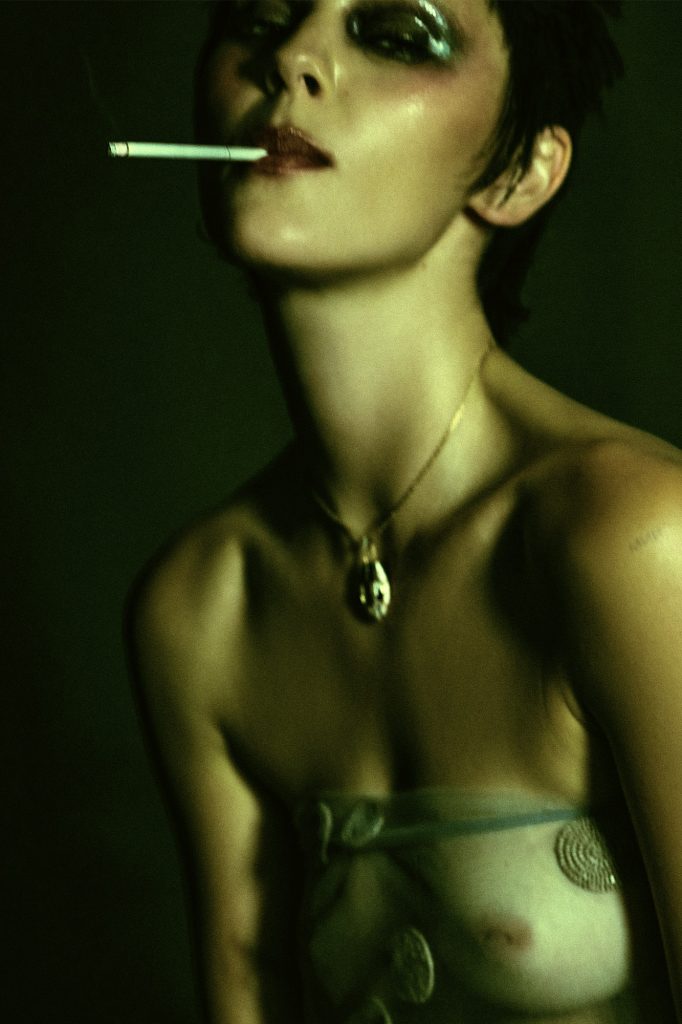
Image: Ela Klingler
A brief encounter. Sometimes that’s enough to get a feel for the mood. I wanted to know what was behind these images, which hover somewhere between fashion, intimacy, and observation. You get the feeling that something is happening with Ela Klingler—not loudly, but secretly. Her images radiate a calmness that seems almost inappropriate in today’s world. Her photography is not a statement, but something intangible. Her work has a delicate directness that doesn’t try to prove anything.
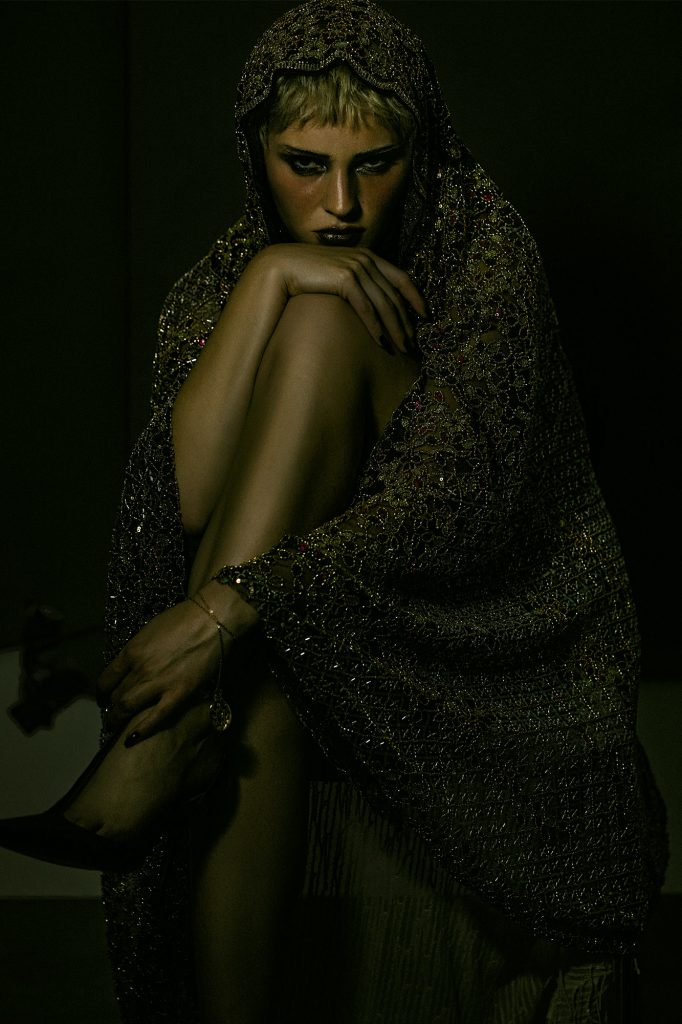
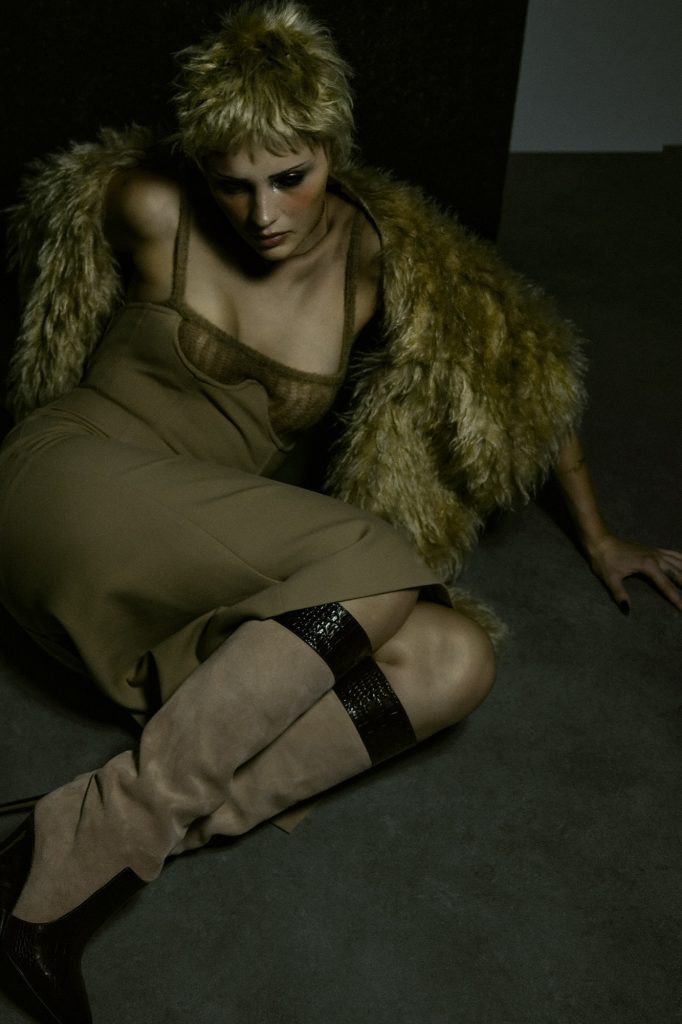
This photo series for SLEEK Magazine Future Rainaissance with Stefanie Giesinger uses theatrical, low-key lighting to create striking silhouettes. The model appears both untouchable and mysterious. The photos read like character studies.
Clothing becomes skin, light becomes emotion.
Perhaps that is precisely what makes her images so special: they have a strikingly consistent and editorial aesthetic—one that combines Berlin avant-garde fashion, neo-noir lighting, and surreal, Renaissance-inspired portrait painting. Dark romanticism meets postmodern minimalism.
Interview by NSNS Magazin (17 Nov 2025)
I'll start with a big question: Can you give me some insight into what's happening in your life as a photographer right now in a few words or by describing
a facial expression?

a facial expression?
Was there a moment or encounter in your life when you thought, “I want to be a photographer”?
Honestly, no. I never actually wanted to be a photographer. I just always wanted to do something artistic—and so far, photography has allowed me to do that.
Honestly, no. I never actually wanted to be a photographer. I just always wanted to do something artistic—and so far, photography has allowed me to do that.
How did you get to where you are today?
I lived and worked in Vancouver for a while and then started studying history in Germany. Unfortunately, university wasn't for me—I hardly did any work and suddenly had a lot of free time.
That's when you inevitably start to focus on yourself and question what really interests you.
I lived and worked in Vancouver for a while and then started studying history in Germany. Unfortunately, university wasn't for me—I hardly did any work and suddenly had a lot of free time.
That's when you inevitably start to focus on yourself and question what really interests you.
What are you looking for in a picture, a face, a pose?
It's hard to say—I usually only know when I see it.
I often just try to portray a certain character that I imagine for the talent and the project.
It's hard to say—I usually only know when I see it.
I often just try to portray a certain character that I imagine for the talent and the project.
Your pictures and your models are wearing designer clothes. Is it about selling a feeling, an attitude? Where would you classify your pictures? In classic fashion photography?
Good question. Styling plays a bigger role for me.
People automatically associate certain emotions or a certain style with the big fashion houses. And, of course, designer clothing is often associated with high quality—which is then reflected in the perception of images.
I can't say for sure whether I'm into classic fashion photography. I've never thought about it – I think as soon as clothing plays a role in the implementation of projects, you automatically become part of it.
Personally, I'm generally more interested in photographic style and aesthetics than in trying to sell something. In the end, however, the two can't be completely separated – especially if you want to earn a living from it. Haha
Good question. Styling plays a bigger role for me.
People automatically associate certain emotions or a certain style with the big fashion houses. And, of course, designer clothing is often associated with high quality—which is then reflected in the perception of images.
I can't say for sure whether I'm into classic fashion photography. I've never thought about it – I think as soon as clothing plays a role in the implementation of projects, you automatically become part of it.
Personally, I'm generally more interested in photographic style and aesthetics than in trying to sell something. In the end, however, the two can't be completely separated – especially if you want to earn a living from it. Haha
Your pictures are influenced by many things. I see Steven Meisel, Paolo Roversi, and a little bit of Corinne Day. If you delve deeper into the subject matter, there are terms like “Berlin Decadence.” “Berlin Decadence” basically describes a mood, a sensibility, a kind of defiant decay of beauty and freedom. How would you describe your concepts and what influences do you have?
Hmm. Maybe an attempt to be the opposite of clean or minimalist.
There's everything from 60s to 90s fashion, photography, films/film stills, artists. Lots of things influence you in some way: music, art, media—everything I consume. For example, I love the work of Steven Meisel and Cindy Sherman
Hmm. Maybe an attempt to be the opposite of clean or minimalist.
There's everything from 60s to 90s fashion, photography, films/film stills, artists. Lots of things influence you in some way: music, art, media—everything I consume. For example, I love the work of Steven Meisel and Cindy Sherman
The pictures with Stefanie Giesinger, for example, have a theatrical low-key lighting that emphasizes the silhouettes. The model appears untouchable and mysterious. It looks like character studies. What idea triggered the series?
Dior runway shows by John Galliano & Pat McGrath. The staging, the looks, the makeup—all of it.
Dior runway shows by John Galliano & Pat McGrath. The staging, the looks, the makeup—all of it.
What is your path from idea to post-production?
Time-consuming, haha. Concept development, putting together a team, casting talent, finding a date. I produce most projects entirely on my own, from the creative concept to implementation and post-production.
As a result, the whole process often takes a little longer.
Time-consuming, haha. Concept development, putting together a team, casting talent, finding a date. I produce most projects entirely on my own, from the creative concept to implementation and post-production.
As a result, the whole process often takes a little longer.
How do you communicate with your models? Do you talk to them beforehand? How do you and the models enter the world you have imagined?
Before the shoot, the models see the concept and the image direction I would like to achieve. On set, I then give the talent as much freedom as possible to experiment.
Before the shoot, the models see the concept and the image direction I would like to achieve. On set, I then give the talent as much freedom as possible to experiment.

What is the context, what is the idea behind this photo?
Light painting. As already mentioned, the inspiration came from the Dior runway shows.
For me, this fit well with the concept and the staged aesthetics.
Light painting. As already mentioned, the inspiration came from the Dior runway shows.
For me, this fit well with the concept and the staged aesthetics.

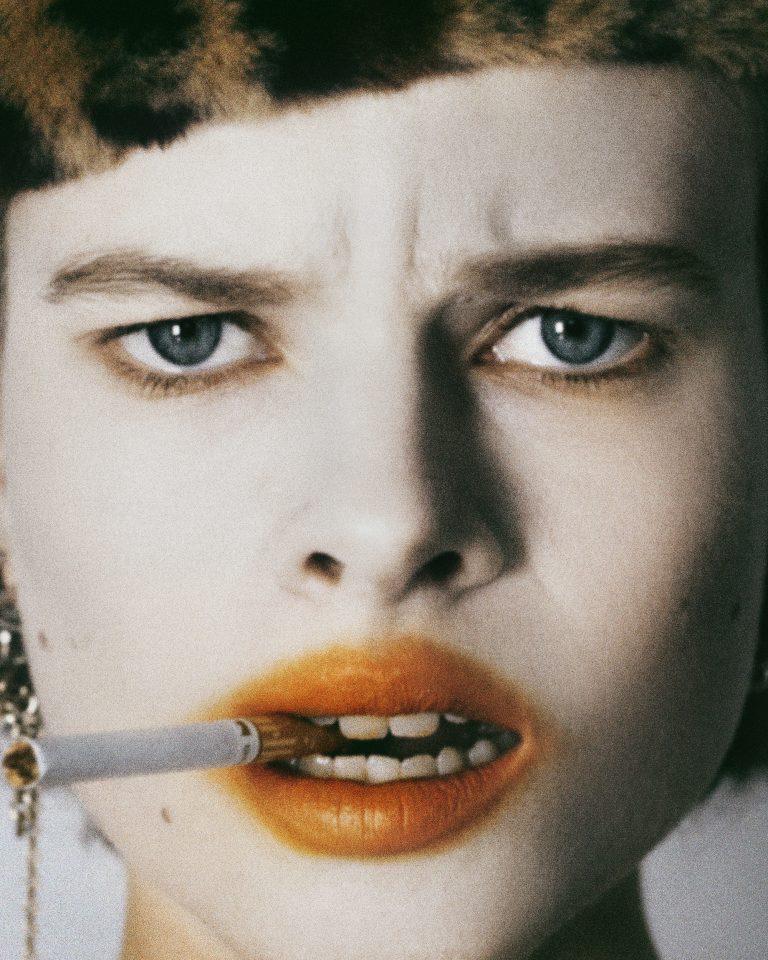
What is the context, what is the idea behind this photo?
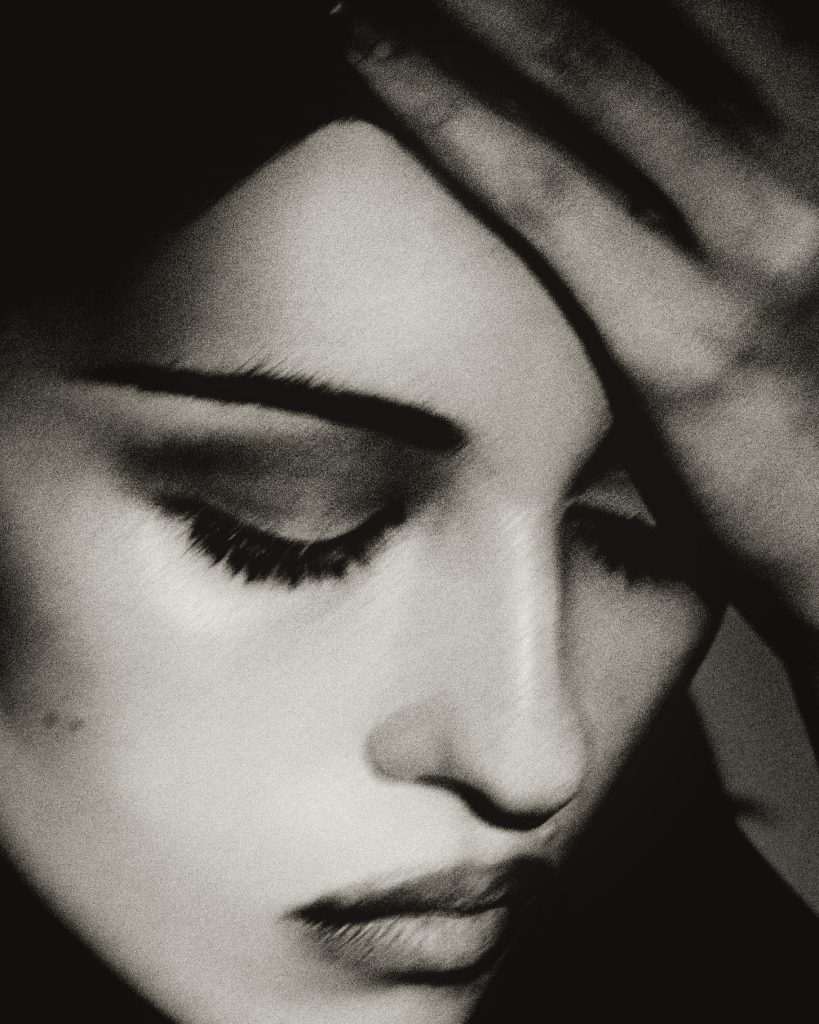
I love close-ups of faces—they often say more. Originally, this was photographed with a much wider angle, but the close-up just worked much better. Thank goodness for post-production, haha.
I love close-ups of faces—they often say more. Originally, this was photographed with a much wider angle, but the close-up just worked much better. Thank goodness for post-production, haha.
MORE STORIES